Benefits of Eating Chicken Head with Its Crown
Published on March 5, 2026 • By Bamidele Alimi
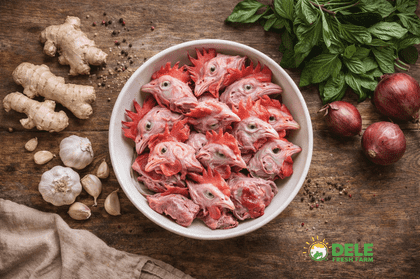
Many traditional kitchens across Nigeria and other parts of the world use almost every part of the chicken. One part that often sparks curiosity is the chicken head, especially when the crown (also known as the comb) is included. While some people ignore this part, others consider it flavorful and nutritious when cooked correctly.
Understanding the chicken crown
The crown or comb is the red fleshy structure on top of a chicken's head. It contains connective tissue rich in collagen and other biological compounds that contribute to texture and nutrition. Studies show that chicken comb tissue contains collagen and hyaluronic acid, compounds commonly associated with connective tissue health.
Nutritional value of the chicken head and crown
Although not widely discussed in modern recipes, chicken head and crown contain proteins, trace minerals, and other nutrients. Moderate consumption can provide the body with nutrients and energy.
- Collagen-rich tissues that contribute to broth flavor
- Natural proteins and trace minerals
- Gelatin that enriches soups and stews
Why some people enjoy eating chicken head
In many traditional cooking cultures, chicken head is valued for its concentrated flavor. When simmered slowly in soup or stew, the bones and connective tissues release rich taste that enhances the overall dish.
This approach is similar to choosing the right poultry parts for different dishes, as explained in Best Chicken Cuts for Stew, Pepper Soup and Grilling.
Cooking chicken head properly
Like other poultry parts, proper preparation is important. Cleaning and cooking with herbs helps improve taste and aroma. Local herbs such as scent leaf, ginger, and garlic are commonly used in Nigerian kitchens.
A detailed guide on preparing chicken without artificial seasoning is explained in How to Cook Chicken with Local Herbs Without Maggi.
Traditional uses in soups and broths
Chicken heads are often added to soups where they simmer slowly. This allows gelatin and collagen to dissolve into the broth, creating a thicker and richer flavor profile.
- Pepper soup
- Traditional chicken broth
- Mixed poultry stew
Connection with poultry maturity
The crown also indicates a chicken's maturity and health. Farmers often observe the size and color of the comb to understand the bird's development and production stage.
This is related to poultry maturity stages explained in Difference Between Point of Lay and Point of Cage Layers, where comb development often reflects growth and laying readiness.
Why some people avoid this part
In urban kitchens, many people prefer boneless meat for convenience. However, traditional cooking methods often value bone-in or whole parts because they enhance flavor and nutritional density.
Final thoughts
Chicken head with its crown may not be the most popular cut in modern kitchens, but it remains a valuable ingredient in traditional cooking. When properly cleaned and cooked with herbs and spices, it contributes flavor, collagen, and nutrients to soups and stews. Understanding different chicken parts helps cooks make better use of the entire bird while reducing food waste.