Why Every Poultry Farm Needs Separate Boots Inside the Brooding House
Published on July 24, 2026 • By Bamidele Alimi
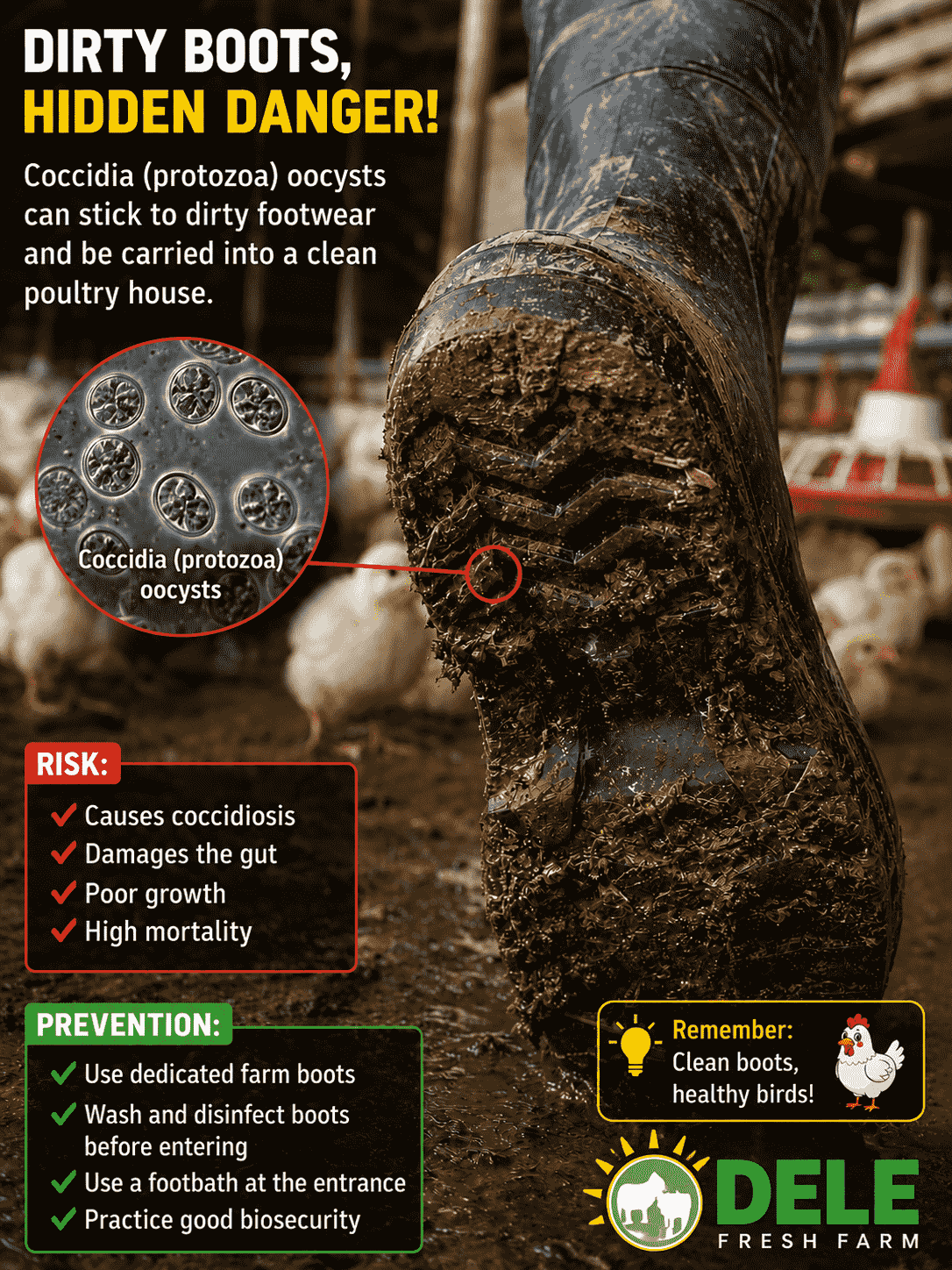
When people think about poultry diseases, they often blame contaminated feed, dirty water, poor ventilation, or infected birds. While these are important risk factors, there is another source of disease that is frequently overlooked — the boots worn by farmers, workers, and visitors.
Every step taken outside a poultry house can pick up harmful microorganisms from mud, animal droppings, wild birds, rodents, other farms, and contaminated soil. If those same boots are worn into a clean brooding pen, they can introduce disease-causing organisms directly into the environment where young birds live.
This is why professional poultry farms around the world require dedicated boots that are only used inside poultry houses.
Why Dirty Boots Are Dangerous
The soles of farm boots have deep grooves that easily trap mud, manure, feathers, and organic material. These materials can carry bacteria, viruses, fungi, worm eggs, and parasites from one location to another.
Even if your brooding house was properly cleaned and disinfected before the arrival of new chicks or poults, contaminated footwear can undo all that hard work in just a few seconds.
Young birds have developing immune systems and are far more vulnerable to disease than adult birds. Introducing harmful pathogens during the brooding stage can lead to poor growth, increased medication costs, and avoidable mortality.
Coccidiosis Can Travel on Dirty Footwear
One of the most common poultry diseases associated with poor hygiene is coccidiosis. This disease is caused by microscopic parasites known as Eimeria, which produce oocysts that are passed through infected droppings.
These oocysts are extremely resistant in the environment and can stick to boots, equipment, wheelbarrows, crates, and other farm tools. Once carried into a clean poultry house, they can contaminate litter, feeders, drinkers, and the surrounding floor where birds naturally peck and scratch.
If conditions are favourable, these parasites multiply rapidly and spread throughout the flock.
Other Diseases That Can Be Spread Through Contaminated Boots
Although coccidiosis is a major concern, dirty footwear may also contribute to the spread of several other poultry diseases and harmful microorganisms, including bacterial infections such as Salmonella and Escherichia coli (E. coli), fungal spores, worm eggs, and viruses that may be present on contaminated farms or in areas frequented by wild birds.
This is why biosecurity focuses on preventing diseases from entering the farm rather than treating them after an outbreak occurs.
Why Separate Boots Should Be Used in Every Brooding House
Dedicated poultry boots create a simple but highly effective barrier between the outside environment and your birds.
Every poultry house should have its own pair of clean rubber boots that never leave the building. Anyone entering the brooding pen should remove their outside footwear and change into the boots reserved exclusively for that poultry house.
This practice significantly reduces the risk of carrying disease-causing organisms from outside into the flock.
Use a Footbath at Every Entrance
Changing boots is even more effective when combined with a properly maintained disinfectant footbath at the entrance of every poultry house.
A footbath should contain a suitable disinfectant prepared according to the manufacturer's recommendations and should be replaced regularly because dirty disinfectant quickly loses its effectiveness.
Simply stepping into an old footbath filled with mud and organic matter offers little protection.
Biosecurity Is Cheaper Than Disease Treatment
Many poultry farmers spend large amounts of money treating diseases that could have been prevented through better biosecurity.
A pair of dedicated rubber boots costs only a small fraction of what farmers may spend on medications, veterinary services, reduced growth rates, poor feed conversion, and bird losses during a disease outbreak.
Good biosecurity should be viewed as an investment rather than an expense.
Simple Biosecurity Practices Every Poultry Farmer Should Follow
- Keep separate boots for every poultry house.
- Never wear outside footwear into a brooding pen.
- Use disinfectant footbaths at all entrances.
- Wash and disinfect boots regularly.
- Restrict unnecessary visitors from entering poultry houses.
- Provide protective clothing for workers and visitors.
- Clean and disinfect equipment before moving it between poultry houses.
- Maintain clean litter and remove wet patches promptly.
Final Thoughts
Successful poultry farming is not only about quality feed, vaccines, or good genetics. It also depends on preventing diseases from entering the farm in the first place.
One dirty pair of boots can introduce harmful pathogens into a healthy flock, putting weeks or even months of hard work at risk.
Whether you raise broilers, layers, turkeys, ducks, or other poultry, adopting the simple habit of using dedicated boots inside every brooding house is one of the easiest and most cost-effective biosecurity measures you can implement.
Protecting your birds starts from the ground up — literally.
Frequently Asked Questions (FAQs)
Why should poultry farmers have separate boots?
Separate boots reduce the risk of carrying bacteria, parasites, viruses, and other disease-causing organisms from outside into the poultry house.
Can dirty boots spread coccidiosis?
Yes. Coccidia oocysts can attach to contaminated footwear and be transported into clean poultry houses where they infect birds.
Should every poultry house have its own boots?
Yes. Using different boots for different poultry houses helps prevent diseases from spreading between flocks.
Are footbaths enough to stop diseases?
Footbaths are an important part of biosecurity but work best when combined with dedicated boots, proper cleaning, visitor control, and routine farm hygiene.