Why More Nigerians Are Turning to Livestock Farming as a Business
Published on June 16, 2026 • By Bamidele Alimi
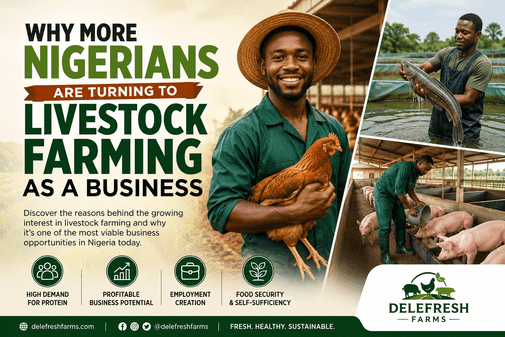
Across Nigeria, a growing number of people are looking beyond traditional employment and exploring opportunities within the agricultural sector. Among the various options available, livestock farming has emerged as one of the most attractive business ventures for both young entrepreneurs and experienced investors.
From poultry and pig farming to fish production, turkey farming, goat rearing, and cattle production, livestock businesses are becoming increasingly popular. This shift is being driven by a combination of economic realities, rising food demand, and the desire for alternative sources of income.
Rising Demand for Animal Protein
Nigeria's population continues to grow, and with that growth comes an increasing demand for food. Animal protein remains an important part of many Nigerian diets, creating a constant market for products such as chicken, turkey, eggs, pork, catfish, goat meat, and beef.
Unlike some industries that depend heavily on changing trends, food remains a basic necessity. Regardless of economic conditions, people still need to eat. This makes livestock farming attractive to individuals seeking businesses that serve an essential need.
Unemployment and the Search for Alternative Income
Many Nigerians have realized that relying solely on salary income may no longer provide the financial security they desire. Rising living costs, limited job opportunities, and economic uncertainty have pushed many individuals to explore self-employment opportunities.
Livestock farming offers a practical option because it can be started at different scales. Some people begin with a few birds or fish ponds, while others invest in larger commercial operations. The flexibility of entry has made the industry appealing to a wide range of people.
Food Inflation Has Created New Opportunities
Food prices have risen significantly over the past few years. While higher food prices create challenges for consumers, they also highlight the importance of food production businesses.
As the cost of chicken, eggs, fish, turkey, pork, and other livestock products continues to increase, many Nigerians see farming as a way to participate in a growing market rather than simply paying higher prices as consumers.
For some entrepreneurs, producing food has become more attractive than trading imported products or operating businesses that depend heavily on foreign exchange.
The Appeal of Poultry Farming
Poultry farming remains one of the most popular livestock businesses in Nigeria. Broiler production, layer farming, turkey farming, and local chicken production continue to attract new entrants due to the large demand for poultry products.
Chicken remains one of the most consumed sources of protein in Nigeria, while turkey demand often increases significantly during festive periods. This consistent demand encourages many people to consider poultry as a potential business opportunity.
Fish Farming Continues to Grow
Catfish farming has become a major agricultural activity across many states. Restaurants, food vendors, households, and processing businesses continue to create demand for catfish and other fish species.
Many Nigerians view fish farming as a business that can be operated on relatively small land areas while still serving a large market. The growth of smoked fish processing has also expanded opportunities within the value chain.
Pig Farming Is Gaining More Attention
Pig farming is another sector attracting increased interest. Pigs are known for their reproductive capacity and ability to convert feed into body weight efficiently when managed properly.
As awareness grows about pork production and processing opportunities, more entrepreneurs are beginning to explore pig farming as part of a diversified livestock business.
Technology Is Making Farming More Accessible
Today's farmers have access to information, training materials, farm management software, social media communities, and online learning resources that were not widely available in previous generations.
Prospective farmers can now learn about feeding programs, housing systems, disease prevention, marketing strategies, and farm management practices without necessarily attending formal agricultural institutions.
This increased access to information has lowered some of the barriers that previously discouraged people from entering the industry.
Growing Interest in Agribusiness Investments
Not everyone interested in livestock farming wants to operate a farm personally. Some individuals are exploring structured agricultural partnerships and agribusiness investment opportunities that allow them to participate financially while experienced farm managers handle day-to-day operations.
This trend has expanded participation in agriculture beyond traditional farmers and has introduced new sources of capital into the sector.
Challenges Still Exist
Despite the growing interest, livestock farming is not a guaranteed path to success. Feed costs, disease outbreaks, market fluctuations, management mistakes, poor record keeping, and inadequate planning continue to affect many farms.
Successful livestock businesses often require proper training, realistic expectations, sound financial planning, and a willingness to learn continuously.
Many new entrants underestimate the importance of management and discover that farming involves much more than simply purchasing animals and waiting for profits.
The Future of Livestock Farming in Nigeria
As Nigeria's population expands and demand for food continues to rise, livestock farming is likely to remain an important part of the country's agricultural economy.
The sector offers opportunities for entrepreneurs, investors, food processors, marketers, transporters, veterinarians, feed manufacturers, and many other participants within the agricultural value chain.
For Nigerians seeking practical business opportunities linked to an essential human need, livestock farming continues to attract attention as a sector with long-term potential.
However, those considering livestock farming should focus on education, proper planning, and realistic expectations. Farming can be rewarding, but like any serious business, success often depends on management, discipline, and the ability to adapt to changing conditions.
Related Reading: